Adding and removing languages

Manage languages for your project

GL Strings supports all ISO 639-1, 639-2, and 639-3 language codes. If you require additional, more rare locales for translation we also support custom languages.

On the project dashboard, you can see detailed information about your project in general and view all existing languages associated with your application or software. To make changes or updates to the languages currently in your project, you can do so via the project dashboard.
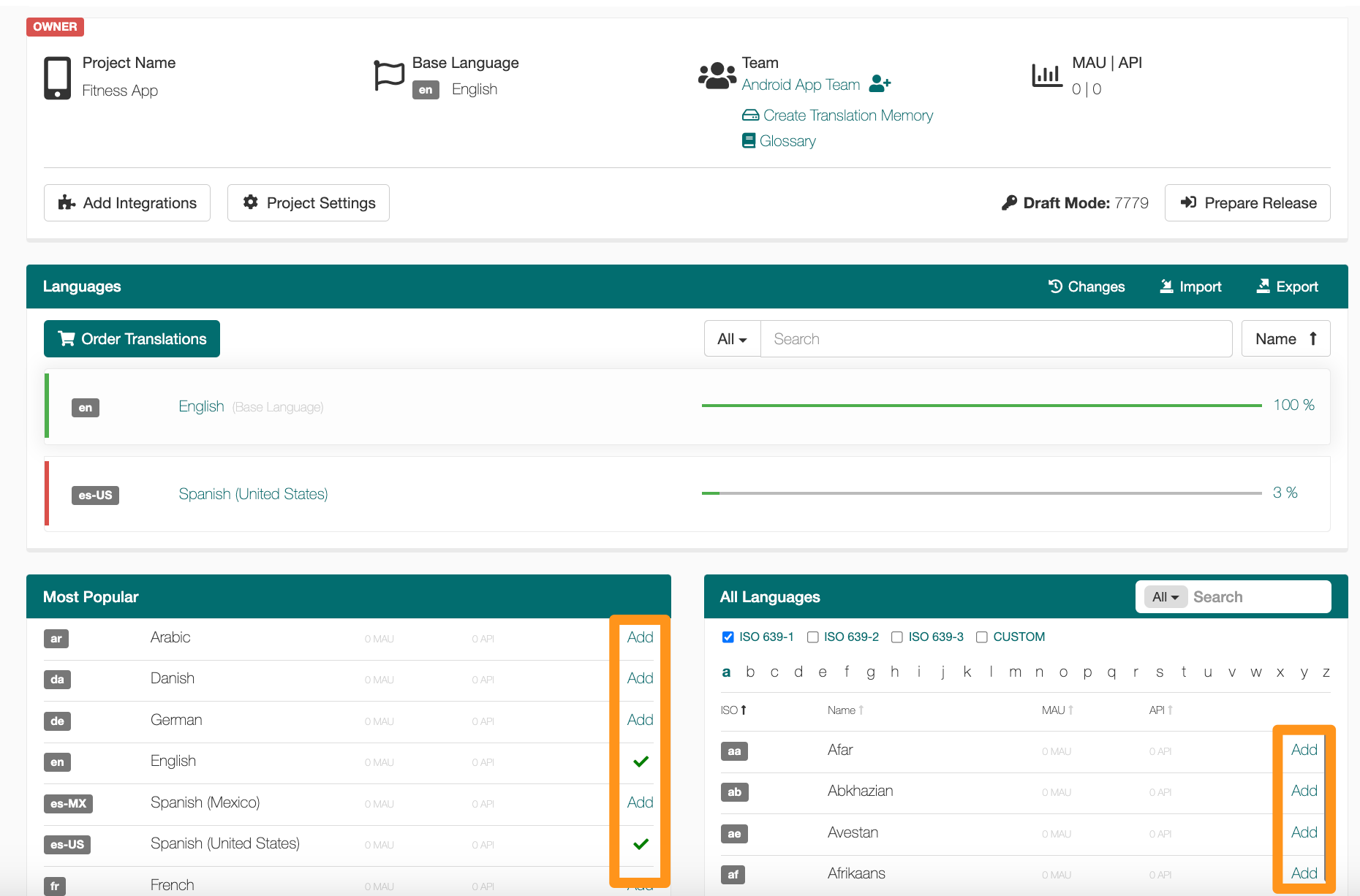
Add a new language

  1. Click Edit languages.
  2. In the search bar, enter the language name or ISO code you want to add.
    • Note: the search defaults to ISO 639-1 language codes. Select additional language codes (ISO 639-2, ISO 639-3, CUSTOM) if necessary.
  3. Hover over the language name and click the plus sign ➕ to add the language.

Delete a language

  1. Click Edit languages.
  2. In the search bar, enter the language name or ISO code you want to delete.
  3. Click the trash icon to delete the language.

Custom languages

When entering a custom language, GL Strings will automatically search the available ISO 639-1 codes to ensure you do not create duplicate codes. If the code does not exist on GL Strings, then you will be able to create a custom language for your translations.

  1. Click Edit languages.
  2. Mark the Custom checkbox.
  3. Enter the two letter ISO code, the two letter Region code, and the language Name.
  4. Hover over the language name and click the plus sign ➕ to add the language.

Change the base language

⚠️ Warning: If your project is integrated with your app, check with your integration engineer before changing the base language as you may need to update your integration. If you do not update the integration with the new base language code, this can cause issues with your application.

Considerations before changing the base language:

  • The new base language must already be added to the project.
  • The values will not migrate between the old and new base language. You will need to migrate the values yourself.

Once you are ready to change the base language, follow these steps:

  1. Click Project settings. Project settings on project dashboard
  2. In the General tab > in the Project section > click the pencil icon next to Base Language. Change base language
  3. In the Edit base language dialog, use the dropdown to select from the available languages in the project.
  4. Click Save.